
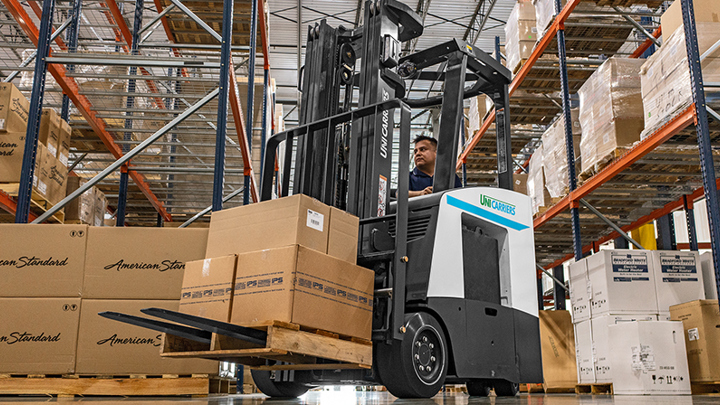
Understanding the ROI of Switching to Electric Forklifts
Understanding the return on investment (ROI) is crucial, especially when considering whether transitioning to an all-electric fleet aligns with your company's operational needs and financial goals.
When considering a transition from internal combustion (IC) forklifts to electric forklifts, cost and long‑term value are often at the top of the list for decision‑makers. While electric lift trucks offer advantages in performance, emissions, and maintenance, the key question remains: How does this investment impact your bottom line?
Evaluating the return on investment (ROI) is essential for determining whether shifting to an all‑electric forklift fleet aligns with your operational requirements and financial goals.
How to Calculate ROI for Electric Forklifts
To determine ROI, businesses should compare:
- Acquisition costs (electric forklift + charger + battery)
- Daily and annual operating savings
- Maintenance cost reductions
- Fuel savings over the forklift’s lifespan
Because electric forklifts offer lower operating costs, the payback period can be relatively short—especially for high‑usage applications. On average:
- Electric forklifts last 5–7 years with proper maintenance
- Lithium-ion batteries can operate for 10+ years, depending on duty cycle
This combination of longevity and cost efficiency contributes significantly to overall total cost of ownership (TCO).
High-Usage Applications: Faster ROI and Maximum Savings
In environments where forklifts operate continuously—such as distribution centers, 24/7 manufacturing, or high-volume warehousing—the ROI of electric forklifts is especially strong.
Benefits for Heavy-Duty Applications:
- Rapid payback due to substantial daily operational savings
- Lower fuel and maintenance costs
- Extended equipment life
- Increased uptime with fewer service interruptions
For operations with long shifts and consistent equipment demand, electric lift trucks often deliver the greatest financial return over time.
Lower-Usage Applications: Longer Payback, Lasting Value
If your operation uses forklifts intermittently—such as small warehouses or part-time applications—the payback period may naturally extend.
However, the long-term benefits remain compelling:
- Reduced fuel costs compared to propane, gasoline, or diesel
- Lower maintenance expenses
- Longer battery life with fewer major repairs
- Cleaner, safer operation
Even with less frequent usage, the environmental and long-term financial advantages of electric material handling equipment add value throughout the forklift’s lifecycle.
Short-Term Financial Gains: Where You Save Immediately
Switching to electric forklifts offers several near-term savings opportunities:
1. Fuel Cost Reduction
Electric forklifts eliminate the need for propane, gasoline, and diesel—leading to significant operational savings.
2. Lower Maintenance Costs
Electric forklifts contain fewer moving parts than IC engines, resulting in:
- Fewer repairs
- Lower maintenance labor
- Reduced downtime
More uptime means more productive hours on the floor.
3. Eligibility for Government Incentives
Many regions offer financial support for adopting electric equipment, including:
- Tax credits
- Government rebates
- Low‑interest financing or grants
These incentives can significantly offset initial purchase costs.
Long-Term Financial Benefits: Sustainability and Compliance
Beyond short-term savings, electric forklifts provide major long-term advantages:
1. Regulatory Compliance
Many state and regional agencies are pushing for zero-emission vehicles in industrial environments. Early adoption helps businesses:
- Stay compliant with evolving emissions regulations
- Avoid penalties related to non‑compliant engine use
2. Longer Operational Lifespan
Electric forklifts and lithium-ion batteries typically outlast their IC counterparts, reducing long-term replacement costs.
3. Increased Productivity
Electric forklifts eliminate downtime caused by engine-related repairs or fuel tank changes. With fast-charging lithium batteries, operators gain:
- Shorter interruptions
- No need for battery swaps (depending on the system)
- More consistent shift performance
The result? Better overall warehouse efficiency and more time spent on revenue-generating tasks.
Is an All-Electric Fleet Right for Your Business?
Deciding whether to switch to electric forklifts depends on:
- Your usage patterns
- Shift structure
- Operating environment
- Space for charging infrastructure
- Long-term growth goals
By evaluating your specific workflow and cost structure, you can determine whether an electric fleet provides the best operational and financial return.
Calculate your potential savings and understand the ROI of switching to electric. Connect with UniCarriers Forklift for a detailed assessment.