
9 Best Practices for Forklift Fleet Management
These 9 best practices for more forklift uptime and less downtime really work! Follow them to help achieve less downtime, more uptime, and reduced costs.
How Long Does a Forklift Last?
- Average lifespan: 10,000 hours (about 5 years at 2,000 hours/year)
- Well-maintained forklifts can exceed 20,000 hours
9 Forklift Fleet Management Best Practices
1. Keep Accurate Records
Track each forklift’s purchase details, maintenance history, and engine hours. This helps identify trends and determine the right time for replacement.
2. Know Your Costs
Calculate ownership cost and maintenance cost per hour to avoid budget drains. Example:
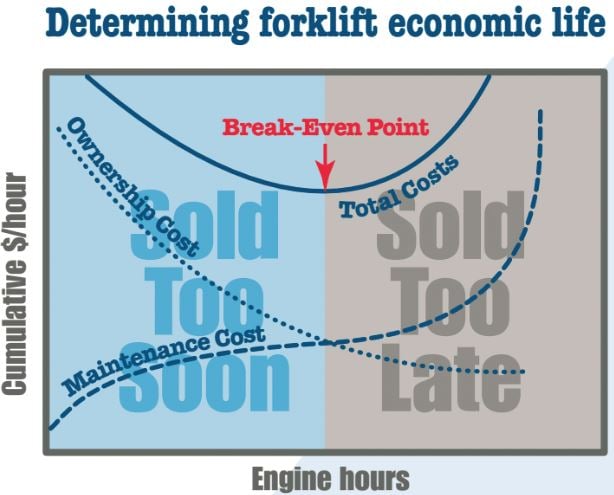
- Ownership cost = (Purchase price – Trade-in value) ÷ Engine hours
- Maintenance cost = Total maintenance ÷ Engine hours
3. Replace forklifts at the right time
4. Match Forklift to Application
Ensure your forklift specs fit your current warehouse layout and load requirements. A dealer audit can help optimize your fleet.
5. Perform Planned Maintenance
Follow manufacturer schedules to prevent costly repairs and downtime.
6. Read the Manual
Use recommended fluids and parts. Review safety and operation guidelines regularly.
7. Train Operators
OSHA requires forklift safety training. Proper training reduces damage, improves safety, and lowers costs.
8. Maintain a Clean Facility
Dust, debris, and uneven floors can damage forklifts and create hazards. Good housekeeping extends equipment life.
9. Partner with Your Dealer
Dealers can assist with audits, training, maintenance programs, and record keeping.
Key Takeaways
- Accurate records and cost analysis = smarter decisions
- Planned maintenance and operator training = reduced downtime
- Dealer support = optimized fleet performance
For expert help with forklift fleet management, contact your local Cat Lift Trucks dealer today.