
How to Choose the Right Forklift Tires: Top 3 Factors for Maximum Performance
Not all forklift tires are created equal. The right tire choice depends on your application, operating environment, and forklift usage. Selecting the proper compound, profile, and size is essential for maximizing tire life and overall performance. Here’s what you need to know.
1. Start with an Application Survey
Before purchasing new forklift tires, have a trained tire expert conduct an in-plant survey. This assessment helps identify the best combination of tire compound, profile, and size for your specific needs. Key factors considered during the survey include:
- Manufacturer specifications
- Load weight and frequency
- Number of shifts and trips
- Travel distance and speed
- Forklift capacity and class
- Surface conditions and turning areas
- Material type and weight
- Housekeeping requirements (e.g., non-marking vs. black compounds)
Many forklift dealers offer this service free of charge.
2. Understand Forklift Tire Types
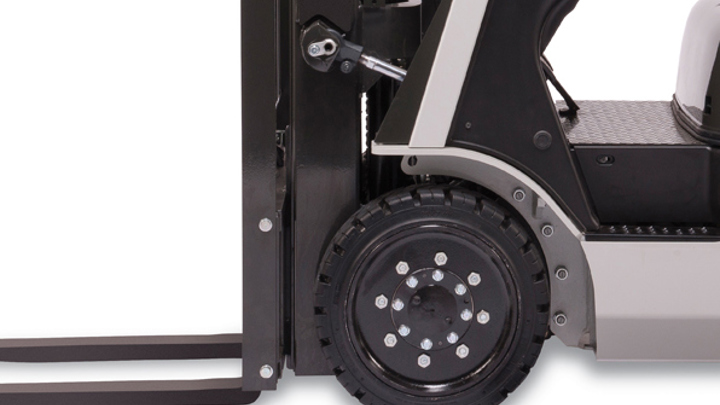
There are two primary types of forklift tires: cushion tires and pneumatic tires. Your application determines which is best.
Cushion Tires
- Ideal for indoor use on smooth surfaces like concrete or asphalt.
- Common in warehouses, manufacturing facilities, and distribution centers.
- Smaller turning radius for tight spaces.
- Typically lower cost than pneumatic models.
Pneumatic Tires
- Suitable for indoor and outdoor use on improved surfaces such as blacktop or hard-packed dirt.
- Larger frame and higher initial cost, but better resale value.
- Not recommended for rough terrain like plowed fields or potholes.
Important: Cushion and pneumatic forklifts have different frames, so you cannot simply switch between these tire types. However, you can change tire styles within the same category (e.g., smooth press-on to traction or grooved tires).
3. Choose the Right Tread or Profile
Selecting the correct tread style ensures optimal performance and safety. Common options include:
- Smooth tires: Best for dry indoor applications and steer axles.
- Traction tires: Versatile for general-purpose use.
- Grooved tires: Designed for heavy-duty trucks and extreme conditions.
- Wide-track traction tires: Ideal for all-season indoor/outdoor use.
Quality Matters
After selecting and installing the right tires, performance depends on manufacturing consistency and material quality. Investing in high-quality tires pays off in durability and uptime.