
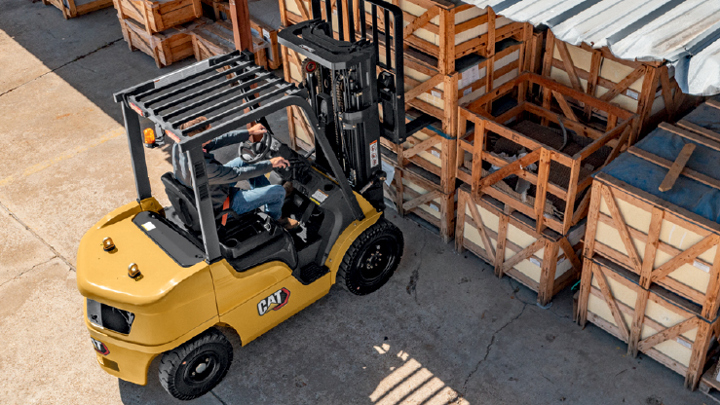
Forklift Basics: Why Lift Height Affects Load Capacity
When lifting heavy loads, choosing the right forklift is not just about power. Lift height directly affects how much weight your forklift can safely handle.
When lifting heavy loads, choosing the right forklift is not just about power. Lift height directly affects how much weight your forklift can safely handle.
Quick Answer
As lift height increases, forklift load capacity decreases because the center of gravity shifts upward and forward, reducing stability and increasing the risk of tipping.
This happens because raising a load shifts the center of gravity upward, reducing stability and increasing the risk of tipping.
What Is Forklift Load Capacity?
Forklift load capacity is the maximum weight a forklift can safely lift under specific conditions, including lift height, load center, and attachments.
Why Does Lift Height Reduce Forklift Capacity?
Lift height reduces forklift capacity for three main reasons:
- The center of gravity moves upward and forward
- Overall forklift stability decreases
- The risk of tipping increases
Think of it like holding a heavy box. The higher you lift it away from your body, the harder it is to balance.
What Is the Difference Between Rated Capacity and Actual Capacity?
Rated Capacity
- Based on ideal conditions
- Typically calculated at a 24 inch load center
- Set at a specific lift height
Actual Capacity
- Changes based on real world conditions
- Decreases with height, load size, and attachments
Example:
A forklift rated for 5000 lbs may not safely lift that weight to full height.
What Factors Affect Forklift Load Capacity?
Several variables impact how much your forklift can handle:
1. Attachments
- Clamps, rotators, and side shifters add weight
- Shift the center of gravity forward
2. Load Size and Position
- Larger loads increase load center distance
- Off center loads reduce stability
3. Mast Type and Lift Height
- Taller masts limit rear tilt
- Higher lifts reduce safe capacity
4. Tire Condition
- Worn tires reduce traction and stability
5. Operating Environment
- Slopes and uneven surfaces increase risk
6. Fork Length
- Longer forks extend load center
7. Battery or Counterweight
- Electric trucks rely on battery weight for balance
- Internal combustion trucks depend on fixed counterweights
Can You Modify a Forklift to Increase Capacity?
Only with manufacturer approval.
- OSHA requires approval for modifications
- Unauthorized changes can reduce safety and stability
- Adjustments like wider tires or added counterweight must be evaluated first
How Do You Read a Forklift Capacity Chart?
A capacity chart shows:
- Maximum load weight
- Lift height limits
- Load center distance
- Always consult the chart before lifting at height. It provides the real capacity of your forklift in specific conditions.
What Features Help Maintain Safety at High Lift Heights?
Modern forklifts include features designed for high lift applications:
Safety Features
- Heavy duty mast design
- Reinforced frames
- Precision hydraulic systems
- Mast tilt control
Productivity Features
- Load weight indicators
- Operator assist systems
- These features are essential in high bay warehouses, narrow aisles, and order picking operations.
Why Does Understanding Lift Height Matter?
Knowing how lift height affects capacity helps you:
- Plan loads more accurately
- Prevent tip overs
- Improve operator safety
- Increase productivity
Lift Height vs Capacity At a Glance
- Higher lift height = lower capacity
- Larger load center = lower capacity
- Attachments = reduced capacity
- Always check the capacity chart
The Bottom Line
Choosing a forklift is not just about how much weight it can carry. It is about how high it needs to lift safely and efficiently.
Understanding lift height and load capacity ensures safer operations, better planning, and improved performance.
Need Help Choosing a Forklift Based on Lift Height and Capacity?
Your local authorized Cat forklift dealer can help you:
- Calculate actual lift capacity
- Select the right equipment
- Improve safety and productivity
Frequently Asked Questions
Lift height reduces capacity because it raises the center of gravity, decreasing stability.
No. That rating applies only under specific conditions. Capacity decreases at higher lift heights.
The load center is the distance from the fork face to the load’s center of gravity, typically 24 inches.
Yes. Attachments add weight and shift the load forward, lowering capacity.