
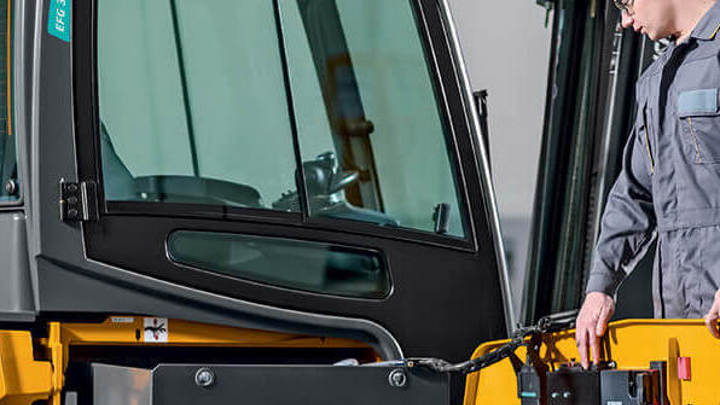
Forklift Battery Watering Guide: How and When to Water a Forklift Battery
Last Updated: September 18, 2026
How Do You Properly Water a Forklift Battery?
To properly water a forklift battery:
- Check water levels before charging.
- Ensure the battery plates remain covered.
- If plates are exposed, add enough distilled water to cover them.
- Fully charge the battery.
- Add clean, distilled water until the battery reaches the manufacturer's recommended level.
- Avoid overfilling, which can lead to overflow and reduced battery life.
Why Is Water Important in a Forklift Battery?
Water plays a critical role in the operation of lead-acid forklift batteries. During charging, water within the electrolyte solution naturally converts into hydrogen and oxygen gases. Over time, this causes water levels to decrease.
If water levels drop too low:
- Battery plates may become exposed
- Internal temperatures can increase
- Battery capacity may decrease
- Charging efficiency may be reduced
- Battery life may be shortened
Maintaining the correct water level helps protect the battery and supports reliable forklift operation.
Maintaining the proper water level in a forklift battery is essential for protecting your electric lift truck, maximizing battery performance, and ensuring safe charging. Whether your fleet uses lead‑acid forklift batteries or lithium‑ion batteries, following correct watering procedures helps prevent overheating, overflow, acid dilution, and premature battery failure.
What Happens If a Forklift Battery Runs Low on Water?
A forklift battery that lacks sufficient water can suffer permanent damage.
Common consequences include:
- Overheating
- Exposed lead plates
- Sulfation
- Reduced run time
- Lower charging efficiency
- Premature battery failure
Routine battery inspections help identify low water levels before damage occurs.
Can You Overwater a Forklift Battery?
Yes.
Adding too much water before charging is one of the most common forklift battery maintenance mistakes.
As the battery charges, electrolyte levels expand. If the battery is already full, overflow can occur and lead to:
- Acid loss
- Corrosion
- Safety hazards
- Reduced battery lifespan
For most lead-acid forklift batteries, water should be added after charging unless the battery plates are exposed.
Below, we answer the most common questions operators have about watering forklift batteries to help you improve uptime, efficiency, and overall forklift battery health.
What Kind of Water Should You Use in a Forklift Battery?
Always use clean, pure water free from minerals and contaminants. Impurities found in tap water—such as calcium, chlorine, and other minerals—can lead to sulfation, corrosion, and long‑term damage to the battery.
Recommended specifications:
- Water with a pH between 5 and 7
- Distilled or deionized water is best
- Never use untreated tap water
Using the correct water helps extend battery life and ensures more efficient charging cycles.
Do Lithium-Ion Forklift Batteries Require Water?
No. Unlike traditional lead-acid forklift batteries, lithium-ion batteries do not require watering. The guidance in this article applies specifically to lead-acid forklift batteries.
Additional Tips for Forklift Battery Maintenance
Proper battery maintenance is crucial for extending the lifespan of your electric lift trucks and minimizing costly replacements. Many operations also benefit from:
- Forklift battery watering systems, which automate watering and reduce labor
- Regular inspection routines to catch issues early
- Following manufacturer guidelines in both the battery and forklift Operation & Maintenance Manuals
By adopting consistent watering practices and using the right tools, you can significantly improve battery efficiency, reduce downtime, and enhance overall warehouse productivity.
Frequently Asked Questions
The frequency depends on battery age, usage patterns, operating environment, and charging practices. Most lead-acid forklift batteries should be inspected regularly and watered as needed according to manufacturer recommendations.
In most cases, water should be added after charging because electrolyte levels expand during charging. If battery plates are exposed before charging, add only enough water to cover them.
Distilled water is recommended because it contains fewer minerals and contaminants that can damage battery cells and reduce performance.
Using tap water is not recommended. Minerals such as calcium, magnesium, and chlorine can contaminate battery cells and shorten battery life.
Exposed battery plates can overheat, warp, sulfate, and lose capacity. Continued operation with exposed plates may lead to permanent battery damage.
Yes. Maintaining proper water levels helps protect battery plates, improve charging efficiency, reduce overheating, and maximize overall battery lifespan.
No. Lithium-ion forklift batteries do not require watering because they use a different battery chemistry than traditional lead-acid batteries.
Overfilling before charging is one of the most common mistakes. This can cause electrolyte overflow, acid loss, corrosion, and reduced battery life.