
The Advantages of AGVs
What are the Advantages of AGVs?
Reduced Personnel Costs Compared to AGV Costs
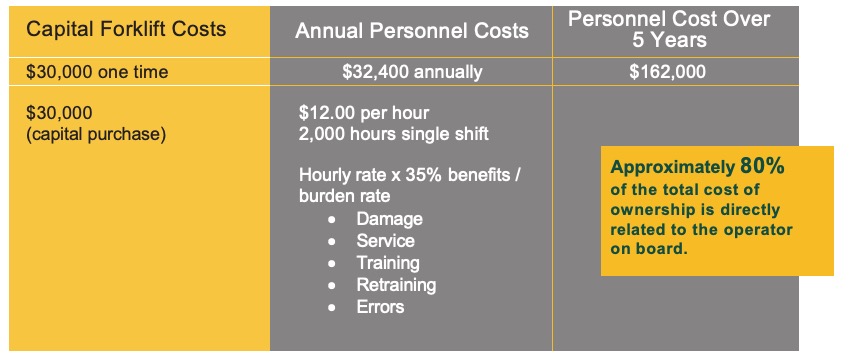
AGVs eliminate costs associated with:
- Wage increases
- Bonuses
- Insurance and benefits
- Training and certification
- Turnover and hiring
In addition to personnel savings, AGVs help reduce costs tied to human error, including product damage, equipment damage, and operational inefficiencies. AGVs provide consistent performance, do not fatigue, and can operate 24/7 in varying conditions. This opens up the potential to lower heating, cooling, and lighting expenses in certain areas of the facility where human operators are no longer required.
Improved Efficiency, Accuracy, and Safety Through Technology
Modern AGVs offer highly advanced navigation and safety features. Systems equipped with laser‑based navigation deliver movement accuracy within millimeters—critical for tasks such as conveyor interfacing and precise pallet handling.
Key technology advantages include:
- Obstacle detection using sensors and reflectors
- Smooth, controlled movements with programmable speeds
- Collision avoidance systems for mixed manual and automated environments
- Reliable, repeatable performance for predictable workflows
AGVs can also integrate with existing systems such as Warehouse Management Systems (WMS) and Enterprise Resource Planning (ERP) software. Many AGV platforms support both standardized WMS connections and custom integrations. In facilities without automation software, AGVs can often operate as standalone systems.
The modularity of today’s AGV solutions allows for exceptional flexibility—supporting changes in workflow, layout, and operational needs.
Determining When Automation Makes Sense
Although AGVs are more versatile than ever, it’s important to evaluate where they will deliver the strongest ROI. AGVs are most beneficial in tasks that involve predictable, repeatable, and high‑volume movements.
When assessing potential AGV applications, consider:
- Load type and weight
- Product movement volume/throughput
- Environmental or temperature conditions
- Number of shifts running daily
- Labor availability and cost
- Space requirements
- Current WMS or software infrastructure
A thorough analysis helps determine which processes are the best candidates for automation.
Have Questions About the Advantages and Disadvantages of AGVs?
Investing in AGVs is a major decision. If you’d like help evaluating your workflows or determining whether AGVs can support your operational goals, reach out to an automation expert or material handling specialist to discuss your needs.