
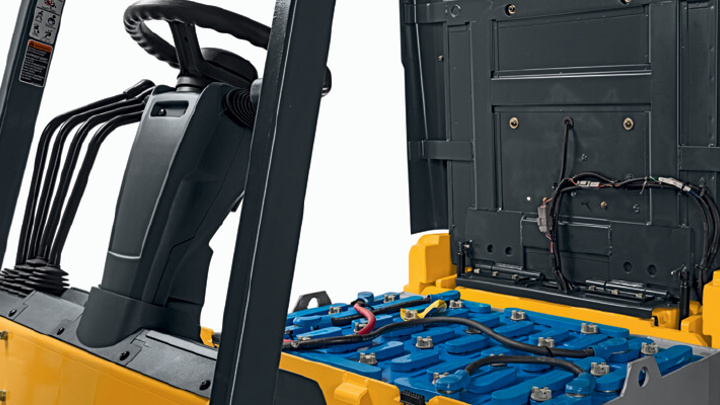
Electric Forklift Battery Maintenance Guide
Forklift batteries can be costly, and properly caring for and maintaining your forklift battery can extend the life of your forklift batteries and save your business thousands.
Proper electric forklift battery maintenance is essential for extending battery life, improving lift truck performance, and minimizing downtime. By training forklift operators on the fundamentals of battery care and implementing a consistent maintenance schedule, you can significantly improve the longevity of both your electric forklift batteries and equipment. A strong maintenance plan should be part of your regular forklift care routine—just like checking tires or monitoring engine components on other equipment.
Forklift Battery Charging Best Practices
Following strict charging protocols is one of the most important aspects of electric forklift battery maintenance. Every battery has a limited number of charge cycles, so charging based on convenience rather than need can shorten its lifespan.
General battery charging guidelines:
- Charge the battery only after an eight‑hour shift or when it is discharged more than 30%.
- Avoid “opportunity charging” too frequently, as it reduces cycle life.
- When charging begins, allow the battery to reach a full charge to prevent imbalance and premature degradation.
- Never let a discharged battery sit for extended periods—doing so increases the risk of hard sulfation, which reduces runtime and capacity.
- Avoid discharging below 80% depth of discharge, as this can cause long‑term, irreversible damage.
- Monitor battery temperature. Excessive heat drastically shortens battery life. Aim to keep batteries near 25°C (77°F) during use and charging.
- Cold batteries (around 15°C / 59°F or lower) may require longer charge times and proper temperature‑compensated charging.
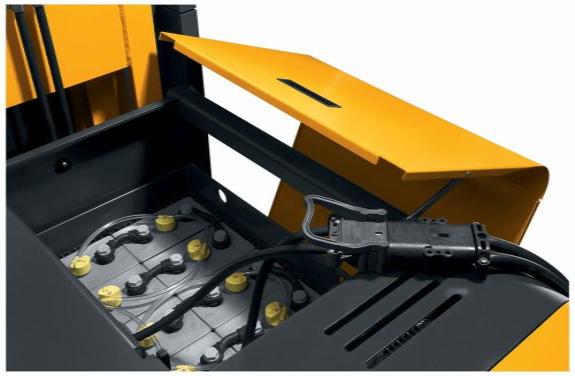
Proper charging habits directly influence battery performance, lifespan, and equipment reliability.
Setting Up a Safe Forklift Battery Charging Station
To ensure a safe work environment, designate a clearly marked forklift battery charging area. This space should include:
- Proper signage and hazard labels
- Eye wash and water access
- Adequate ventilation
- A nearby fire extinguisher
- Emergency phone access
Additional safety precautions:
- No smoking near charging areas
- Remove metallic jewelry before handling batteries
- Use proper lifting equipment for heavy batteries
- Wear PPE (gloves, goggles, apron, face shield)
- Apply brakes and position forklifts correctly during charging
- Avoid charging batteries with sealed vents above 25 amperes
- Stop charging immediately if overheating or electrolyte leakage occurs
- Maintain accurate maintenance logs
- Dispose of batteries according to local hazardous waste regulations
A properly organized charging station helps maintain compliance and operator safety.
Check and Maintain Battery Fluid Levels
Battery watering is essential for performance and lifespan. To keep your forklift battery fluid levels in a safe range:
- Check water levels every five charging cycles.
- Inspect multiple cells to confirm water coverage over the plastic battery element.
- Only top off water after charging, not before.
- Do not overfill—batteries need room for fluid expansion during use.
- Use water with a pH of 5–7, within manufacturer impurity limits. Distilled water is recommended.
- Perform monthly specific gravity readings using a hydrometer. Most fully charged batteries target around 1.285, but always confirm manufacturer specs.
Regular watering ensures optimal charge retention, prevents overheating, and reduces sulfation.
Keep Forklift Batteries Within Safe Temperature Ranges
Extreme temperatures can significantly reduce battery life. For maximum longevity:
- Maintain operating temperatures below 113°F (45°C).
- Ensure good airflow around the battery compartment in hot environments.
- Remember: battery life is reduced by 50% for every 10°C increase above 25°C.
Temperature management is one of the most effective ways to extend battery lifespan.
Equalizing the Battery
Some electric forklift batteries require periodic equalizing, a controlled overcharge designed to:
- Remove sulfate buildup
- Reverse acid stratification
- Restore consistent cell balance
Most wet‑cell batteries need equalizing once per week, though you should always follow manufacturer guidelines. Do not exceed the recommended frequency—more frequent equalizing can harm the battery.
Cleaning Your Forklift Battery
Routine cleaning helps prevent corrosion and protects electronics.
- Clean battery tops monthly using warm water or approved battery cleaner
- Follow safety guidelines during cleaning
- Regular cleaning can be required for warranty compliance
A clean battery is safer, performs better, and lasts longer.
Final Thoughts
A strong electric forklift battery maintenance program is essential for maximizing battery life, reducing downtime, and ensuring safe operation. By following proper charging procedures, monitoring fluid levels, maintaining safe temperatures, and performing routine cleanings and equalizing, your facility can operate more efficiently while protecting its investment in electric forklifts and pallet jacks.