
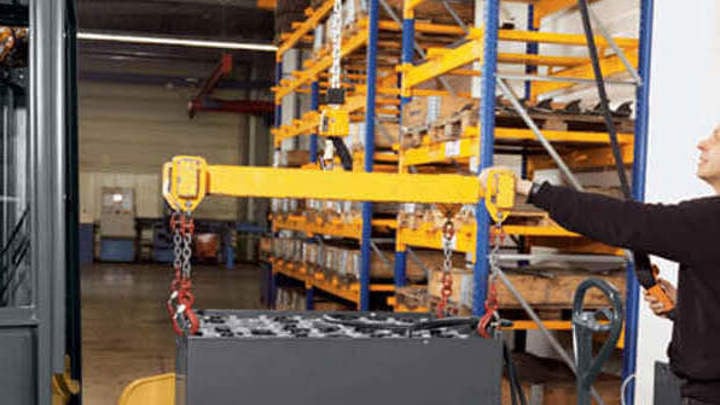
Proper Forklift Battery Care & Handling
Charging an electric forklift battery correctly is essential for safety, performance, and longevity. Unlike standard lead-acid batteries, electric forklift batteries require specific care and maintenance to maximize their lifespan. When handled properly, these heavy-duty batteries can last for years. Below are the top tips and best practices for charging and maintaining forklift batteries.
Proper Battery Handling and Safety Precautions
Forklift batteries are extremely heavy and contain hazardous materials, so proper handling is critical to prevent injury and damage.
Safety guidelines include:
- Never attempt to lift or move a battery alone
- Wear protective gear: steel-toe shoes, safety glasses, and gloves
- Remove all jewelry before handling batteries
- Ensure your facility has working eye wash stations for emergency use
When and How to Charge a Forklift Battery
Charging at the right time is key to battery health. Avoid charging based on convenience—follow these guidelines instead:
- Charge only when the battery drops below 30%, but not when completely dead
- Avoid overcharging or undercharging, as both shorten battery life
- Always turn off the charger before connecting or disconnecting the battery
- Designate a safe, well-ventilated charging area
Proper charging habits help prevent costly repairs and extend battery life.
Forklift Battery Charging Guidelines
To ensure safe and efficient charging, follow these best practices:
- Match the charger to the battery (correct voltage and Ampere Hour rating within 10%)
- Inspect charger cables and connectors for damage before use
- Maintain a watering log for warranty compliance
- Limit charging cycles—most warranties void if charged more than 300 times per year
- Allow a full 8-hour charge for proper acid distribution
- Perform an equalize charge weekly to rebalance acid concentration
- Add water after charging, once the battery has cooled
Routine Battery Maintenance Tips
Consistent maintenance helps prevent issues like stratification and overheating:
- Keep battery storage temperature below 113°F
- Equalize batteries regularly to prevent acid layering
- Check fluid levels every five charges
- Follow manufacturer guidelines for watering and charging intervals
Final Thoughts
Charging an electric forklift battery isn’t complicated—but it requires safety precautions and a consistent process. By following these guidelines and performing routine maintenance, you can extend battery life, reduce downtime, and improve overall forklift performance.
Learn more about Jungheinrich's energy solutions here.