
3 Ways To Increase Warehouse Efficiency
Efficient warehouses lead to satisfied customers — it’s that simple. Speed, accuracy, and streamlined processes keep products moving and operations running smoothly. Below, we break down the top three strategies for improving warehouse efficiency and increasing the speed and accuracy of your shipments.
Why Warehouse Efficiency Is a Growing Challenge
Industry research shows that a large percentage of warehouse activity focuses on handling less‑than‑full pallets — including case and piece picking. As SKUs continue to expand and customer expectations rise, many operations are facing:
- Increased case and piece picking
- Growing labor requirements
- Higher operational costs
- The need for improved storage density
- Pressure to increase productivity without expanding footprint
Modern warehouses now use a wide mix of material handling equipment, including low‑level order pickers, high‑level order pickers, walkie pallet trucks, and turret trucks to support both case picking and full pallet movement. With more SKUs and fewer available storage slots, managers must continually evaluate how to pick faster, move more product, and reduce operating costs.
How to Improve Warehouse Efficiency
There are three core strategies every warehouse can use to improve performance:
1. Choose the Right Equipment for Your Operation
Selecting the right forklifts and warehouse equipment has a major impact on productivity, accuracy, and fleet efficiency. The mix of equipment — such as order pickers, lift trucks, pallet trucks, and turret trucks — directly affects how quickly operators can move, pick, and replenish inventory.
Types of equipment to consider based on application:
- Low‑level or high‑level order pickers for case and piece picking
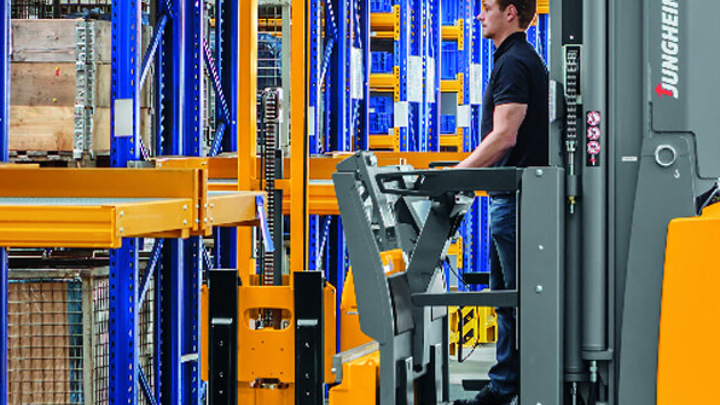
- Turret trucks for full pallet picking, replenishment, and putaway
- Electric pallet trucks or walkies for low‑level ground transport
- Counterbalanced forklifts for dock operations
Many modern lift trucks now include advanced features and navigation assistance to boost productivity, improve accuracy, and reduce the size of the forklift fleet needed to run an operation efficiently.
2. Implement Best Practices in Your Picking Process
Improving warehouse efficiency often begins with optimizing the picking process. Best practices include:
Optimize Product Slotting
Using warehouse slotting software or a Warehouse Management System (WMS) helps ensure high‑demand SKUs are stored in the most efficient locations — reducing operator travel time and improving throughput.
Move Away from Paper Picking
Digital picking methods—such as RF scanning, voice picking, or pick‑to‑light—reduce errors and help increase picking speed.
Use the Right Storage Systems
Integrate storage solutions that match your SKU profile, such as:
- Flow racks for higher pallet counts
- High‑density storage systems
- Very narrow aisle (VNA) racking for maximizing space
These adjustments help warehouses increase accuracy while reducing wasted movement.
3. Evaluate New Technologies and Semi‑Automation
Emerging technologies, including forklift semi‑automation, are creating new opportunities to enhance picking efficiency.
What Is Forklift Semi‑Automation?
With semi‑automation, once the forklift enters a narrow aisle or designated system, onboard navigation technology takes over specific movements — guiding the truck to the correct location efficiently and accurately. Operators stay in control when manual adjustments are needed, but unnecessary search time is eliminated.
Benefits of Semi‑Automation
- Up to 25% higher productivity
- Improved operational accuracy
- Reduced travel time and error rates
- Smaller required fleet size
- Lower labor burden
- Optimized order picking and stacking
Equipment Often Used With Semi‑Automation
- Man‑down turret trucks
- Man‑up turret trucks
- Order pickers
These advancements help warehouses increase throughput without expanding labor or floor space.
Reducing Downtime With Modern Equipment
New forklift technology is also helping reduce downtime — one of the biggest contributors to lost productivity. Some modern electric forklifts offer extended run times that eliminate the need for battery changes, interim charging, or extra charging equipment.
This results in:
- More productive shifts
- Fewer interruptions
- Lower maintenance costs
- Increased operator uptime
A Strategic Investment in Warehouse Efficiency
From upgrading picking equipment to integrating semi‑automated technology and optimizing storage systems, there are countless ways to improve warehouse efficiency and remain competitive. As customer needs evolve, investing in productivity‑driven solutions can help reduce costs, enhance accuracy, and increase the speed of your warehouse operations.
Warehouse managers should evaluate their specific application and consult with a qualified material handling expert to determine the best solution for their environment.
Need help making your warehouse more efficient? Contact your local Jungheinrich dealer with questions.