
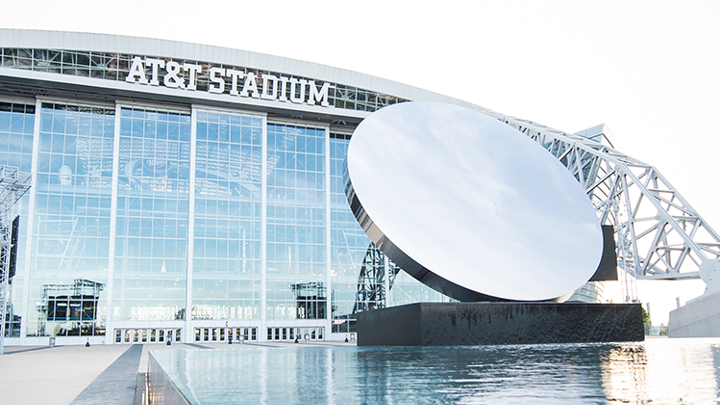
How Do the Dallas Cowboys Use Material Handling Equipment to Improve Operations?
Streamlined stadium logistics and warehouse operations
The Dallas Cowboys use Cat® Lift Trucks and Jungheinrich® warehouse equipment to streamline stadium logistics and warehouse operations, reducing field conversion time and improving efficiency across a 400,000 sq. ft. distribution center.
Powering Performance Off the Field: Dallas Cowboys Material Handling Strategy
When fans think of the Dallas Cowboys, they see performance on the field. Behind the scenes, however, a sophisticated material handling operation is responsible for keeping everything running on schedule.
From converting the field for major events to managing global merchandise distribution, efficiency is critical. The Cowboys rely on a fleet of Cat lift trucks and Jungheinrich warehouse solutions to meet these demands.
What Challenges Do Stadium Operations Like AT&T Stadium Face?
Large stadiums like AT&T Stadium must handle frequent event changeovers, heavy materials, and tight operational timelines.
Key challenges include:
- Moving extremely heavy materials such as turf rolls
- Completing rapid field conversions between events
- Operating safely in confined spaces
- Maintaining uptime during continuous event schedules
For example, the Cowboys regularly move:
- 46 turf rolls
- Approximately 12,000 pounds each
How Do Cat Lift Trucks Improve Stadium Efficiency?
Cat lift trucks provide the power and control needed to handle heavy loads safely and efficiently in stadium environments.
Key results include:
- Field conversion time reduced from 12 hours to 10 hours
- Improved handling of high-weight loads
- Better maneuverability in tight stadium spaces
These improvements allow operations teams to complete critical tasks faster while maintaining safety and precision.
Before |
||||||||
After |
||||||||
Hours |
0 | 2 | 4 | 6 | 8 | 10 | 12 | 14 |
How Do the Dallas Cowboys Manage Warehouse Operations?
The Dallas Cowboys operate a 400,000-square-foot merchandising warehouse that supports global product distribution.
To maintain efficiency, they use Jungheinrich equipment, including:
- Pantograph reach trucks
- High-level order pickers
Key benefits:
- Ability to run up to two full shifts on a single charge
- Increased productivity and throughput
- Enhanced operator safety and confidence
According to their team, these solutions have “revolutionized” warehouse management and significantly improved productivity.
What Equipment Does the Dallas Cowboys Use for Material Handling?
The Cowboys rely on a fleet of more than 50 material handling units across their operations.
Dallas Cowboys fleet50+ material handling units |
Stadium operations |
Warehouse operations |
| Cat DP120N and GP25N | Jungheinrich reach trucks, order pickers |
Equipment includes:
- Cat® DP120N and GP25N lift trucks
- Jungheinrich® reach trucks and order pickers
This combination supports both heavy-duty stadium work and high-efficiency warehouse operations.
What Results Have the Dallas Cowboys Achieved?
By implementing Cat Lift Trucks and Jungheinrich solutions, the Dallas Cowboys have achieved:
400K |
12K lb |
12 --> 10 hrs |
50+ |
| sq. ft. fulfillment warehouse | weight of each of 46 turf rolls | field conversion time | material handling units in the fleet |
- Faster field conversions (2-hour reduction)
- Improved operational efficiency
- Increased warehouse productivity
- Greater equipment reliability and safety
These improvements support their ability to deliver consistent, high-quality experience for fans and customers.
Why Do Material Handling Solutions Matter for Sports and Entertainment Venues?
Material handling plays a critical role in enabling large venues to operate efficiently.
For organizations like the Dallas Cowboys, it ensures:
- Events stay on schedule
- Inventory moves efficiently
- Operations scale to meet demand
- Teams can focus on delivering exceptional experiences
Built for Performance On and Off the Field
The Dallas Cowboys are known for excellence, and that standard extends beyond the game.
With Cat Lift Trucks and Jungheinrich warehouse solutions, they have built an operation that delivers reliability, efficiency, and performance at every level.
Watch the Dallas Cowboys in Action
Frequently Asked Questions
The Dallas Cowboys specifically use Cat Lift Trucks and Jungheinrich warehouse equipment to support stadium operations and manage a 400,000 square foot merchandising distribution center. These solutions help move heavy materials, streamline workflows, and improve overall efficiency.
Stadium operations must manage heavy materials, tight timelines, and frequent event conversions. At AT&T Stadium, crews handle 46 turf rolls weighing about 12,000 pounds each, requiring powerful, reliable equipment that can operate safely in confined spaces.
Cat Lift Trucks deliver the power, control, and durability needed for demanding stadium environments. The Dallas Cowboys for example reduced field conversion time from 12 hours to 10 hours after implementing Cat Lift Trucks equipment, improving efficiency and productivity.
The Dallas Cowboys use Jungheinrich reach trucks and order pickers in their 400,000 sq. ft. warehouse to manage inventory and fulfill global merchandise orders. These trucks can run up to two full shifts on a single charge while improving productivity and safety.
The Dallas Cowboys specifically operate a fleet of more than 50 material handling units, including Cat Lift Trucks DP120N and GP25N lift trucks for heavy-duty stadium tasks and Jungheinrich reach trucks and order pickers for warehouse operations.
By using Cat Lift Trucks and Jungheinrich equipment, the Dallas Cowboys have reduced field conversion time by 2 hours, improved operational efficiency, increased warehouse productivity, and enhanced safety across their facilities.
Material handling is essential for keeping large venues running efficiently. It enables faster event changeovers, organized inventory management, and safe movement of heavy materials, helping ensure a seamless experience for fans and staff.